Showing posts with label audio/listening. Show all posts

Monday, February 16, 2015

Why You Should Write Out Your Notes


You have that great, expensive laptop to use for school.  You see other students taking notes in class, making concept lists, taking reading notes, and other learning tasks on their laptops—so why not do the same?

Here's the reason it's a good idea to skip the laptop and write out your notes:

You learn better when you write it out.  

Our brains just work that way.  If we slow down to write things out, it's easier for all that information to be fully processed by our brains—and makes it more likely that we'll remember it.

Besides that, by using the part of our brains that functions in the act of writing words and drawing sketches, we not only process the information in another way—we have another place in our brain to reinforce and remember the information for the long term.

Sure, if things are going too fast for you to keep up, it's a struggle.  But your brain works to sort out the essential information and how to condense it.  That helps you learn it even better!  If you do write out your notes, you'll struggle less in the long run.

This a great strategy for learning the overwhelming amount of new information you encounter in your A&P course, eh?

Want to know more?


Strategy: Here's Why Writing Things Out By Hand Makes You Smarter

  • D. Baer  Business Insider  DEC. 16, 2014, 10:56 AM
  • A brief article summarizing why this technique works.
  • my-ap.us/15TWn6i


The Pen Is Mightier Than the Keyboard: Advantages of Longhand Over Laptop Note Taking

  • P. Mueller & D. Oppenheimer Psychological Science January 16, 2014
  • Abstract of a recent research report summarizing experimental results.
  • my-ap.us/15PGwVt


Here are some related posts from The A&P Student


Image: Wellcome Trust - William Harvey's lecture notes

Tuesday, January 27, 2015

The Heart Song


I've always thought that silly songs are great mnemonic devices in the human sciences.  I've seen them work from kindergarten (remember the ABC song?) and up through medical school (even in pharmacology).

If you find them "catchy" then you'll find yourself repeating them in your head.  Or maybe even out loud.  And that's the kind of thing that helps your brain form long-term memories!

One I recently ran across is in a music video original produced to help 6th-graders learn about the heart.  But it may help you as you begin your study of the heart in A&P!

Watch it here.


Another one is a classic favorite: Pump Your Blood

Want more silly songs?  Check these out!

Monday, September 8, 2014

Echocardiogram Visualizes Heart Function


One of the best ways to learn about the heart is to watch it work.  But how can you do that, considering that if you open up the thoracic cavity, then slice open the heart, you'd break it?

But biomedical science has shown us another way to see the parts of the heart and how they work.  It's called echocardiography.

It's a technique that uses the same technology as the sonograms you've seen of fetuses inside their mother's belly.  Basically, it bounces sound waves through the body and makes an image of whatever bounces back (an echo). But echocardiography is adapted specifically to the heart and its function.

Want to see echocardiography in action and better visualize heart function? Try watching this video.


Video source: my-ap.us/WnyEXi

Image credit: Patrick J. Lynch, medical illustrator

Monday, August 12, 2013

Exercise (lightly) while you study

Some recent research has shown that if you exercise lightly while you study, you may learn a bit better than if you are sitting quietly.

Apparently, light exercise--for example, riding a stationary bike at a gentle pace--during the process of creating new memories helps you remember things better.  However, vigorous exercise seems to reduce recall in the short term and has no effect in the long term.

There's certainly more that scientists have to figure out about this phenomenon. But in the mean time, it may be worth trying these strategies:

  • Walk slowly on a treadmill while reviewing your flashcards.
  • Ride gently on an exercise bike while reading your textbook.
  • Listen to an audio summary of your textbook chapters or a recorded lecture while doing light gardening or household chores.
  • Quiz your study partners while taking a leisurely stroll through the park or across campus.  But NOT across the parking lot!

Wednesday, April 20, 2011

Synapatic Cleft rap video

Need a fresh perspective on the function of nerve signaling?

Here's a parody of Wu-Tang's "Gravel Pit" made by students to help them integrate their knowledge of synaptic signaling and the role of neurotransmitters.

Check out the video (after making sure that your speakers are cranked up):


Download the audio

You may want to review the nerve cell outline before or after watching the video.

Did you know that the discovery of the first neurotransmitter happened in a dream?  Really! Check out Receptors by Richard Restak.

Looking for other silly songs?

Saturday, February 12, 2011

Record with your pen!

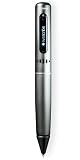
Sometimes newfangled technology products really do revolutionize how we learn.  One of the newer, niftier learning aids is the set of Smartpens offered by Livescribe.

Smartpens are pens that record both sound and what you write as you use it. 

For example, you can turn on the  Smartpen as your A&P class begins, then record the professor and student discussion as you write your notes.

After class, all you have to do is tap on a part of your notes to replay the audio that goes with it!  Or you can replay the whole class!  If you are using the earbuds that come with the pen, you could also replay a part of the class that you want to replay.

If you want to, you can then dock your  Smartpen in a small USB penholder that comes with your  Smartpens to upload the recording to your Livescribe library.

Once a recording is in your library, you can upload it to the Livescribe site as a pencast.  You can then review the pencast any time you like.  You can keep your pencasts private or you can share them publicly.

This is a great way to replay an entire class to review it . . . or to go back to a part of the class that puzzles you so you can replay your note taking while the voices of your professor and classmates are also replayed.  What a great way to review your newly learned A&P concepts!

If you use the  Smartpen to record others, make sure you have their permission first. Not all professors permit their classes to be recorded. And test out the volume settings and your location in the room to get the best recording.

Here is a simple example of a pencast that quickly summarizes one concept in A&P.

Bone Cell Actions
brought to you by Livescribe

A great study project for your A&P study group would be to produce pencasts like this example and post them to share with the whole class!

To use the Smartpen you have to use the special paper that comes with the pen. Livescribe also provides a file that allows you to print the special paper on your computer printer. However, I prefer to use the inexpensive notebooks available from Livescribe.

This video briefly summarizes the concept of the Smartpen and how you can use it to improve learning.


If you already have some pencasts for A&P that you've posted for public viewing, why not post the link here? Just "comment" on this blog article and include the link.

Sunday, June 7, 2009

Reading scientific terms

I've said before that the first step to learning the concepts of A&P is learning the language of A&P. Some new research shows us why learning and recognizing the terms used in an A&P course are important for understanding the story being told in the course.

A recent article in Science News summarizes new research that demonstrates that when you read a passage, such as in your A&P textbook, your brain is recognizing whole words rather then reading each term letter by letter. At least that's what appears to be happening with "good readers" of the material. Folks that have difficulty reading a passage probably have to stop more often at unfamiliar terms and read them letter by letter (or word part by word part).

Reading experts have understood for a long time that familiarity with the words . . . the vocabulary of the material you are reading . . . improves reading speed and retention. Now, we have some insights as to how the brain works in producing this effect . . . and proof to back up what was once conjecture about brain mechanisms.

So how can we apply this concept to improving your learning of A&P?
  • Always familiarize yourself with the new terms of each new chapter of your A&P textbook before you read the chapter
  • Read through the word list out loud to give your brain the familiarity with term it needs to recognize the terms as you encounter then when reading. The word list begins at the start of each chapter. This sounds silly, and it seems like it might be a waste of time, but it really works . . . and in the long run, saves you time by allowing you to read faster.
  • Even if you don't read the textbook (a really bad idea), you'll need these terms to understand your teacher, handouts, and your own notes
  • Use the in-text pronunciation guides and online audio pronunciation guide that comes with your textbook to make sure that you use the correct pronunciation for each term. This allows your brain to really "own" the term so that it doesn't trip you up and slow you down as you read.
  • By putting a little time and effort into getting familiar with new words at the beginning of a new topic, you'll end up saving time later on. And most importantly, you'll be much more likely to understand what you are reading.
Studying A&P can be frustrating because of all the new terms involved. But you've just learned a great way . . . a scientifically supported way . . . of reducing that frustration!

For more tips on learning terminology, including some brief videos, see these previous articles.

[photo by (nz)dave at flickr]